Aftermarket exhausts improve performance by letting burnt gas leave your engine with less resistance. In practice, that means sharper throttle response, a modest lift in power and torque, and a sound that suits the car better than the quiet factory set-up. The size of the gain depends on the vehicle, the parts you choose and how the whole system is built, so it pays to know what you’re buying before you book anything in.
If you’re weighing up aftermarket exhausts in Perth, this guide covers what actually changes, what doesn’t, and what to check first. We’ll look at where a factory system holds your engine back, which parts make the biggest difference, and how to stay on the right side of WA’s rules.
How a Factory Exhaust Holds Your Engine Back
Car makers don’t design an exhaust with performance as the priority. They design it to pass noise tests, keep costs down, suit a range of engines and keep the cabin quiet at 110 km/h on the freeway. That usually means restrictive mufflers, narrow piping, tight bends and plenty of sound-deadening material.
Each of those compromises adds backpressure, which is the resistance the engine pushes against on every exhaust stroke. Some backpressure is normal. Too much wastes energy the engine could be sending to the wheels. A well-designed aftermarket system removes the unnecessary restriction without going to extremes, and that is the core of aftermarket exhaust performance.
What Aftermarket Exhaust Performance Looks Like in Real Life
Power and torque
On an otherwise standard, naturally aspirated car, a cat-back system usually delivers a small, measurable gain. Turbocharged cars tend to respond better, particularly when the pipework closest to the turbo is freed up, and the gain grows again if the engine is tuned to suit. Anyone promising 30 kW from a muffler swap on a stock four-cylinder is selling you a story. Real gains are honest, noticeable and usually mid-range, which is where you do most of your daily driving.
Throttle response
This is often what owners notice first. With less resistance in the system, the engine clears itself faster, so the car feels livelier when you roll onto the throttle. It’s a feel-based improvement more than a number on a dyno sheet, but it changes how the car drives.
Fuel economy
You may see a small improvement at steady cruising speeds, because the engine isn’t working as hard to push gas out. Most people then enjoy the new sound and use more throttle, which cancels the saving. Treat better economy as a possible bonus, not the reason to upgrade.
Sound
Sound is the most obvious change, and it is also the easiest to get wrong. A good system sounds deeper and cleaner under load and settles down at cruise. A poor one drones through the cabin on the highway and gives you a headache by Mandurah. Tone is shaped by pipe diameter, muffler design, the layout of the system and the material used, so it’s worth deciding what you want before anything is ordered.
Weight
Many performance exhaust systems are lighter than the heavy factory setup, especially when the original has large baffled boxes. It’s a small gain, but every kilo you remove from the rear of the car helps.
The Parts That Make the Difference
When people say “exhaust upgrade”, they could mean anything from a new tailpipe to a full system. Knowing which part does what makes it easier to decide where your money should go.
Extractors (headers)
These sit closest to the engine and collect gas from each cylinder. Factory manifolds are often cast and cramped. Well-designed extractors improve how cleanly each cylinder empties, and they tend to deliver some of the biggest gains in a complete set of performance exhaust upgrades. They also cost more and take more labour to fit.
Catalytic converter and mid-pipe
A high-flow catalytic converter reduces restriction while still doing its emissions job. Removing a cat entirely is not an option for a registered road car in Western Australia, so a quality high-flow unit is the sensible route.
Cat-back system
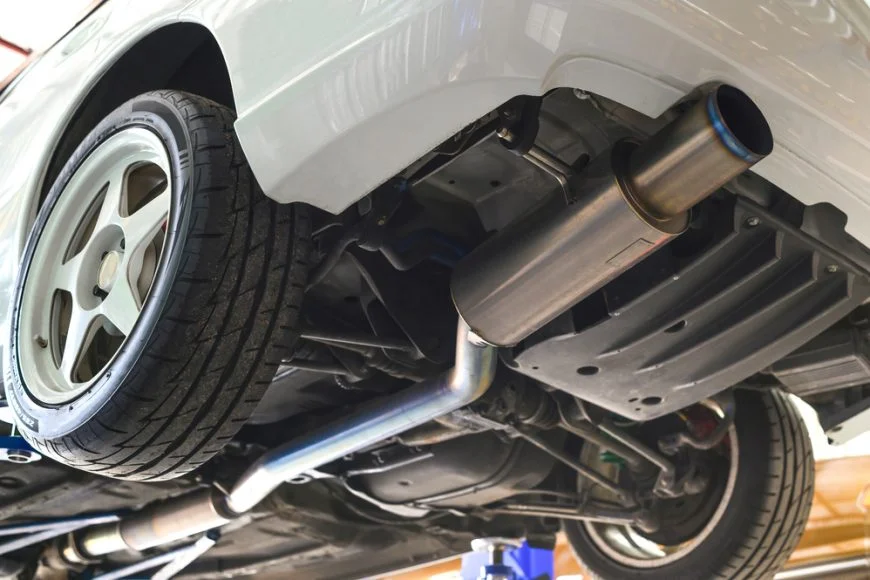
This covers everything from the converter rearwards: the mid-pipe, muffler and tailpipes. It’s the most popular upgrade because it makes a clear difference to sound and response without touching emissions equipment.
Pipe diameter and bends
Pipe size should match the engine’s output, not just look impressive. Smooth, mandrel-bent pipework keeps the diameter consistent through each corner, while crush-bent pipe pinches and restricts flow. It’s an easy detail to overlook and a good one to ask about.
Material
Stainless steel resists rust and lasts well, which matters in a coastal city with salty air. Mild steel is cheaper but won’t last as long, particularly if the car lives near the beach.
Why Bigger Isn’t Always Better
There’s a common belief that the biggest pipe wins. It doesn’t. An oversized pipe slows exhaust gas velocity, and that loses low-rev torque. You end up with a car that sounds fierce and feels flat below 3,000 rpm, which is where most Perth traffic keeps you.
The aim is the right diameter for your engine and how you drive it. A daily-driven hatch needs a different set-up from a weekend turbo build, and a tow-rated ute needs something else again. Engine performance upgrades work best when the exhaust is matched to the rest of the car, including the intake, the tune and the turbo if you have one.
Off-the-Shelf or Customised Exhaust Solutions?
Bolt-on kits suit plenty of popular models, and they’re often a good starting point. But they’re built to a generic design, and some cars simply don’t have a kit that fits well. Lifted 4WDs, modified engine bays, unusual wheel and tyre combinations and imported models can all throw up clearance issues.
That’s where customised exhaust solutions earn their place. A fabricator builds the system around your car, choosing the diameters, routing and muffler to suit the engine and how you use it. If you want something built from scratch, Mavs Engineering handles custom exhaust systems as one-off projects, so the result suits your vehicle rather than the average one.
Staying Legal in Western Australia
Before you spend money, check that what you plan to fit is road legal. Exhaust modifications that make a vehicle excessively loud, or that interfere with emissions equipment, can lead to a defect notice and failed inspections. Cars aren’t supposed to be unnecessarily noisy, and that applies to the pipes on your car, not only to how you drive it.
The Department of Transport explains how vehicle changes are approved in its guidance on modifying or constructing a vehicle in Western Australia, and it also warns that modifying without the needed approval can affect your insurance. A reputable workshop should be able to tell you what’s acceptable for your car before the work starts. If a shop shrugs and says “it’ll be fine”, look elsewhere.
What Aftermarket Exhaust Installation Involves
A proper aftermarket exhaust installation is more than unbolting one system and bolting on another. A typical job looks like this:
- Inspection: The workshop checks the existing system, mounts and nearby components for rust, leaks and clearance problems.
- Removal and fitting: The old system comes off, and the new one is test-fitted and aligned so nothing rubs, rattles or sits too close to the floor, fuel lines or suspension.
- Securing and sealing: Gaskets, hangers and joints are fitted properly so there are no leaks. A small leak near the front of the system can ruin both the tone and the performance.
- Test drive and check: The car is driven to listen for drone, vibration and heat issues, then rechecked once the system has heated and cooled.
A straightforward cat-back fit is often a same-day job. Extractors, custom fabrication and anything involving a turbo will take longer. Heat is also worth planning for: exhaust parts get hot, so a good installer will check clearances and use heat shielding where needed.
Choosing the Right Workshop
Price matters, but it shouldn’t be the only filter. A few questions help you separate a careful workshop from a quick one:
- Can they explain why a particular system suits your car and how you use it?
- Do they fabricate or modify pipework themselves, or only fit what’s in a box?
- Will they talk honestly about expected gains and the limits of what an exhaust alone can do?
- Can they advise on legal limits and on pairing the exhaust with other changes later?
A shop that answers these plainly is usually one that will look after your car properly.
Ready to Upgrade Your Exhaust?
Aftermarket exhausts won’t turn a daily driver into a race car, but a well-chosen, well-fitted system can make a car feel more responsive, sound better, and breathe more freely. The best results come from matching the system to your engine, your driving and your local rules, then having it installed by people who care about the details.
If you’re thinking about exhaust upgrades in Perth, talk to the team at Mavs Engineering. Let us know what you drive and what you want from it, and we’ll recommend a system that makes sense, whether that’s a bolt-on set-up or a one-off build. Contact Mavs Engineering today for a quote.
FAQs:
1. Do aftermarket exhausts really increase horsepower?
Yes, but the gain is usually modest on a standard naturally aspirated engine and larger on turbocharged cars. The bigger benefits are often throttle response and mid-range torque. Gains grow further when you pair the exhaust with other engine upgrades, such as a tune.
2. Will an aftermarket exhaust make my car too loud?
Not if it’s chosen well. Loudness comes down to muffler design, pipe size and layout, and plenty of performance exhaust systems are tuned for a refined cruise with a stronger note under load. Tell your installer how much sound you want, and ask about drone before you commit.
3. Is an aftermarket exhaust legal in Western Australia?
It can be, as long as it doesn’t make the car excessively noisy and it keeps the required emissions equipment. Rules vary by vehicle and modification, so check the Department of Transport’s guidance and ask your workshop what suits your car.